
When should you book a mobile ultrasound ?

Updated: May 13
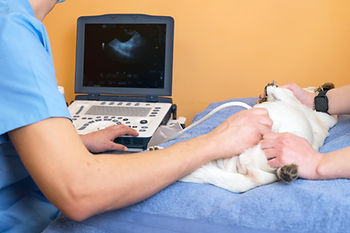
When should a veterinary hospital book a mobile ultrasound?
Most veterinary hospitals have ultrasound machines and many will even have a person who is talented at doing ultrasound exams.
However, appointments can stack up, emergencies can happen, and sometimes associates leave to work elsewhere.
Sometimes there are cases that get complicated. The vomiting dog is not improving. Things are not matching up with the radiographs or maybe there has been weight loss without a clear explanation.
Sometimes, it will be easier on everyone to bring in some help.
“Let's set an appointment for this patient with mobile ultrasound.”
At Veterinary Intelligence, our mobile ultrasound service helps veterinarians get advanced diagnostic answers without disrupting workflow, delaying care, or referring every complicated case out of the clinic.
Our mobile ultrasound service is intentionally built around practical imaging support with rapid access to boarded specialists who see complicated cases each and every day. Robert can show up and capture ultrasound images, upload them with labs, rads, a detailed patient history and then send them off to a board-certified internist (or a board-certified radiologist) to be interpreted and presented back with a full case consult or a radiologist report.
For those very busy veterinary practices with multiple associates, our mobile ultrasound service will allow doctors to continue seeing appointments while diagnostic imaging support is brought directly into the clinic. This helps with exam room turnover.
Here are some situations that can generate the need to call us for an ultrasound:
Vomiting or Diarrhea Cases That Aren’t Adding Up
Ultrasound is often the next step when radiographs and medical management do not explain GI signs and symptoms.
Ultrasound can help evaluate:
Obstruction
GI inflammation
Foreign bodies
Intestinal masses
Pancreatic changes
Free abdominal fluid
Abdominal Pain With Limited Answers on Radiographs
Many abdominal structures are difficult to fully evaluate on radiographs alone.
Ultrasound provides additional information on:
Pancreas
Spleen
GI tract
Liver
Mesenteric lymph nodes
Palpable Masses
When a mass is identified on physical exam, ultrasound can help:
Determine organ origin
Evaluate surrounding tissue
Assess abdominal involvement
Guide fine needle aspirates
This often helps clinics make faster and more confident treatment recommendations without immediately referring the patient elsewhere.
Abnormal Bloodwork
Ultrasound is commonly useful when laboratory findings suggest disease that cannot be localized through exam or radiographs alone.
Common examples include:
Elevated liver values
Kidney abnormalities
Adrenal concerns
Protein abnormalities
Unexplained inflammatory changes
These cases frequently benefit from imaging correlation before moving toward referral or advanced procedures.
Suspected Pancreatitis
SNAP tests can be useful screening tools, but ultrasound often provides important clinical context.
Ultrasound may help evaluate:
Pancreatic inflammation
Peripancreatic fat changes
Secondary GI involvement
Free fluid
Concurrent disease processes
For many clinics, this means more confident case management and clearer communication with pet owners.
Urinary Tract Cases
Mobile ultrasound is commonly used to evaluate:
Kidneys
Bladder
Ureters
Prostate
Especially when:
Patients are recurrently blocked
Radiographs are inconclusive
Kidney values are worsening
Hematuria remains unexplained
Free Fluid in the Abdomen
Ultrasound is one of the most effective ways to:
Identify free fluid
Determine likely source
Guide fluid sampling safely
These are often urgent cases where rapid answers matter.
Cancer Staging
Ultrasound is frequently part of staging workups involving:
Liver
Spleen
Lymph nodes
Effusion assessment
Having mobile imaging available locally can reduce delays and help clinics maintain continuity of care for clients.
Unexpected Weight Loss
When patients continue losing weight without clear explanation, ultrasound can help identify hidden disease processes that may not appear on radiographs or routine bloodwork.
What to Expect
Veterinary Intelligence brings ultrasound imaging directly to your clinic.
Services include:
Abdominal ultrasound exams
Focused diagnostic scans
Case-based imaging support
Collaborative imaging discussions with your team
All ultrasound studies are interpreted by board-certified veterinary radiologists or board-certified veterinary internists, with full reports typically returned within 24–36 hours.
Local Support Matters
Veterinary Intelligence was built to provide practical imaging support for veterinary practices across the Texas Panhandle, SE Colorado, SW Kansas, Western Oklahoma, and NE New Mexico.
This is not a generic corporate imaging service.It’s local access, direct communication, and experienced imaging support designed around real veterinary workflow. Most clinics already know the moment when an ultrasound should happen.
The challenge is usually:
finding the time,
finding the expertise,
or finding the workflow capacity.
That’s where mobile ultrasound becomes valuable. When the case gets complicated, when radiographs aren’t enough, or when the schedule is already overloaded: Book the ultrasound with us.
-Robert


Comments